Showing posts with label 2013 Books. Show all posts

Thursday, 28 November 2013

November 2013 - Ghost World by Daniel Clowes


Ghost World is a graphic novel and tells the story of two teenage girls, Enid and Rebecca, who are trying to come to terms with their impending adulthood. The story also explores their apparent confusion over sexuality as they attempt to cope with the evolution of their complicated friendship post high school. A graphic novel was a new experience for a lot of our members and had a somewhat lukewarm reception. Even though it was relatively short at 80 pages, not everybody finished it with some saying they missed what was going on. We felt that to get anything out of the story it needed to be read in a different way to a novel and attention had to be paid to the pictures juxtaposed with the dialogue, similar to how you might watch a subtitled film.

There was general agreement that nothing major happened, which may be down to the subject matter. Rebecca and Enid weren’t exceptional in anyway and while this may have been intended to help the reader connect with them the general consensus was that the book felt flat and slow paced. We mostly felt that the characters themselves were believable and were impressed at how true to life the protagonists were considering the author is male. Some felt that the character of Enid especially, with her ‘devil may care’ attitude, would have resonated with a younger self, but reading as an adult she became more irritating. However, we felt it was strange trying to get to know characters purely through dialogue with no narration which went against many initial expectations that the illustrations would make them easier to understand.

The ending felt very abrupt as time seemed to speed up, and wasn’t satisfactory for some with the plot being ‘up in the air’. However, it did generate some interesting discussion with very different conclusions drawn. A number of individuals found it to be a very hopeful ending after quite a depressing tale, and took Enid’s departure to be a symbol for new beginnings. On the flip side, some believed this to be a metaphor for suicide.

The majority of the group would not read anything else by Daniel Clowes. However, there was a generally positive attitude towards reading further graphic novels with some being more interested in something else ‘true to life’ with others more interested in reading something at the Marvel end of the scale.


We had 12 members present and we gave the book an average score of 4.75/10 with 7 being the highest and 1 the lowest.

Write up by Byron

Friday, 18 October 2013

October 2013 - A Walk Across the Sun by Corban Addison


Unfortunately this book wasn't received well at all, with the exception of just a couple of the members (who really liked it) we found the book irritatingly unbelievable and couldn't connect emotionally with any of the characters, which given the difficult subjects covered in this book (child prostitution and loss of a child), could only be put down to the authors lack of descriptive writing, and character development.

We all started out, wanting to be engaged and educated by the subject matter but either found it hard to get into with the story swapping or were immediately put off by the writing style. Right from the beginning the characters were extremely cold, without emotion, making it hard for us as the readers to care about them, even though we understood the impact the events would have had in the real world. It almost felt as though Addison was writing a journalistic piece, just stating the facts rather than "showing" us a story. Addison seemed torn between wanting to write a legal thriller and a shocking story about two girls lead into the child trafficking world in India after the devastating effects of the Tsunami; one or the other would have sufficed. Many times at our meeting the "hero" was thrown in with regards to Thomas, every hunch he had seemed to pay off, and all the clues fell nicely together... This just wouldn't happen in the real world, let alone within three months of a child going missing and trafficked across the world into the "undergrowth".

Many of the members failed to finish the book, which is uncommon for us as a group, due to mainly his writing style, convenience of plot progress and lack of emotional connection with the characters. Even the quotes that were added at the top of each chapter seemed out of place, and irrelevant to the chapter ahead, as though they were there to make the book feel a more intelligent read.

It's a shame that as a group we found the plot unbelievable, Addison would have done better to keep to one or other of the genres (child trafficking or legal thriller) and also to one country to avoid the "Jet-Setting" that took place far too often in this book! The poor girls Sita and Ahalya went through a lot, but the details were too sanitary and just didn't get gritty and descriptive enough to make us believe or do justice to the very, very real issues of child exploitation. Thomas seemed to always "tag along" and kept saving the day, it all moved far too fast and should this have been a true story it's very unlikely that Sita would have been found at all, let alone in three months and without being hooked on drugs or sexually abused. It may seem as if we wanted to read a horror story, but in truth, all we wanted was a realistic novel, were the author had done their research, this did not seem the case.

Many members also stated how the writing was poor, non-descriptive making it difficult to place the surroundings, even though you knew the scene was in Bombay, or Paris, the writing done nothing to spark up our imagination. The couple of members who did enjoy the book, found it an eye opener, page turned and would read other books by Addison.

There were far too many characters in the book, the bad guys didn't seem as bad as they should have and the main characters were not developed well. Thomas was annoying from the beginning, self involved and thought himself a hero, who wasn't even really sure if he wanted to win his wife back at the beginning and if the convenience of a job opening in Bombay didn't arise, we're not sure he would have ever tried. Poor Tera, was a stereotypical office fling gone wrong and in general women were portrayed badly, never giving women in these horrendous situations enough justice.

The only parts that stuck with us, were how Sita managed to keep escaping but then getting caught - Never really enduring any harsh punishment and their pre Tsunami life was memorable. An eye opening passage, once mentioned by one member jogged the memory of others was the swallowing of large grapes, preparing Sita to be able to swallow the drug packages without chocking.

The ending was far too happy and unrealistic, all the ends were tied up and the only bit of sadness came in the form of an earlier side story of a young girl in the USA being found dead... It was as though that was thrown in to make sure the readers had mixed emotions towards the end. It would have worked much better as one story instead of two and set in one country. Both the girls were accepted back into society, even though Ahalya was unclean and was a single mother, sadly this would unlikely result in the happy ending portrayed.

Only 4 out of 17 would read another book by Corban Addison, making him one of our least popular authors. Interesting subject matter, just not written particularly well. The book is probably better suited to those who like "have a go hero", legal thrillers with a happy ending, which as it seems, is not really us.

We had 15 people give their score out of 10, resulting in an average of 4/10 (lowest score 2, highest 7)

Write up by Vicki

September 2013 - The Sense of an Ending by Julian Barnes


This book follows Tony Webster from his school days through to retirement. It explores the idea of memory and it’s imperfections when Tony’s life and perception of events is turned around by the arrival of a lawyers letter that throws up surprises.
Overall most of the members were unsure if they liked the book, they found the writing often beautiful and the central theme of memory to be interesting and well explored, however found the main character irritating and difficult to like and that it was a bit repetitive and that they felt the author was showing off. It was discussed that this was a literary book and it was felt that this was the reason many members found it lacked storytelling and many found it a “sad story” and a “passionless book”.

Many members found the narrator to be dull and that he showed a lack of emotion and they would have liked him to change in some way through the course of the book. He showed denial around the main incident in the book and seemed to have created his own history, which he had to confront and reflect on towards the end of the book. As this was a single narrative many felt that the other characters were sketchy and that they were not in the book enough to get to understand them properly. The members found Veronica to be complex but humourless and that the hatred she felt towards Tony was not explained. She was meant to be aloof and many found that this took away from her character. It was felt that Adrian was well drawn but again his role was more as a device for the narrator’s story to unfold around.

We spent very little time discussing the plot as it was felt that the book was built around the themes not the story. The main theme being memory and how this can be distorted, this rang a bell with many members and they felt that it had been very well done. Another theme that ran through the book linked in with the theme of memory was the idea of what is history. These were discussed during their school days in a somewhat pretentious way and the idea about evidence and interpretation wove through the book. This led to a discussion on the nature of perception and facebook. We also discussed the theme of suicide at some length and the way that the first suicide was felt to be weird and received with a lack of empathy by the school boys and the idea of it being a “blaze of glory” was a bit uncomfortable. It was felt that overall this theme was not well developed and was shown as being more about intellectual reasons and philosophy which didn’t hold true through the book.

There were mixed views of the writers style. Overall it was felt to be too factual and dry and therefore not very moving, some didn’t finish the book as didn’t feel inclined to care. The letters were seen as a good device which grabbed the reader however the writer style was lacking in peaks and troughs and this meant that the book didn’t grab many of the members. It was felt that the book evocated the sense of the period it was set in. Some members would read another short book by this author but not many would bother with a longer one.

The ending was shocking but because it was dealt with in such a factual manner many felt that they had missed something and had to check back to make sure they had understood. Some felt that they weren’t sure they got the ending either, while understanding it they didn’t understand why veronica kept saying to him "you still don't get it". There were felt to be too many questions left hanging that people just didn’t care enough about. There was manly relief at it being tied up and done and there was a general apathy towards the book.

There were 16 members who gave a score and the average was 4.6 out of 10 with the highest being 8 and the lowest 0

Write up by Vicki R

Tuesday, 13 August 2013

August 2013 - The Fault in our Stars by John Green


The Fault in Our Stars is the story of Hazel, a teenage girl who has terminal cancer. Hazel meets cancer survivor Augustus at support group and romance blossoms!

Overall the group was very positive about this book. We were a little apprehensive to read a book about cancer as we were worried it would be depressing but we felt that the author’s writing style and way of dealing with the topic really worked well. It wasn’t overly sentimental or romanticised, it dealt with cancer in a very matter of fact way. A lot of the group found that they got into the book as it went along and ended up liking it despite themselves.

The characters felt very real, both the teenagers and the adults. It was commented that in ‘young adult’ books the parents are often not developed as characters but they were in this book, some of the exchanges between Hazel and her parents were very moving. Some felt that the dialogue was a bit affected, with the teenagers trying too hard to use big words and coming across quite pretentious. But we then realised that that is the way teenagers do speak, they are not very self-aware and are trying to sound cool in everything they say! Some felt that the children were too mature for their age. Most of the characters though, had real depth. For example, it was interesting we (as readers) could tell that the author in Amsterdam had had someone close to them die of cancer, we actually knew before the other characters realised.

Everyone felt that the plot was believable. Meeting a cancer support group is likely to happen, with children being much more pragmatic than adults at dealing with illness. Some felt that the story of the author in Amsterdam wasn’t very believable and didn’t really fit into the story, but others really liked it and gave the teenagers a purpose, something to live for. One part that a lot of us found unbelievable was when the author turned up at the funeral and in the back of Hazel’s car. It might have been more realistic if the author had just corresponded through email or post, not very likely he would have come to America considering he was a very self-centred person and an alcoholic!

One passage that someone found particularly interesting was when Hazel got the call to tell her Gus has died. One member of book club had been through a similar experience so really related to it and felt that the author portrayed it accurately. A lot of us liked the concept of Hazel thinking of herself as a “grenade”, ready to explode at any moment and ruin the lives of those around her. Another passage that was mentioned was when they held Gus’s pre-funeral so he could hear what they would say about him – a bit gratuitous but played to many people’s secret desire to hear what people would say about them at their funeral. Another person mentioned the part where Hazel looked at Gus’s Facebook page and saw loads of comments from people that didn’t know him.

Considering mostly we are very critical of the endings of books, the comments about this one weren’t bad at all! We felt it was emotional and were all glad it didn’t just end mid-sentence, mirroring the end of Hazel’s favourite book! A lot of us liked the authors writing style, we found it bold, honest and just the right amount of descriptiveness. Many people would read another book by the author (one already has!).

The book received an average rating of 7.6/10, with 9 being the highest and 6 being the lowest (13 votes).

Write up by Sarah.

July 2013 - One Thousand White Women by Jim Fergus


One Thousand White Women by Jim Fergus was fictitious with a vein of truth at the beginning.

It tells the story of how the U.S government made a deal with the Cheyenne tribe in which they would give them one thousand white women as brides with the purpose of making lasting peace between the two of them.  And that is where the truth ends.  This deal was never arranged but the story that follows is a fictional account of what would have happened.

There were mixed feelings about this book, with most of the group acknowledging that although this was an interesting period of history, the story of May Dodd was so unbelievable that it spoilt the book.  As this book had only been published in the USA and France, we wondered why it had not been published in UK but then decided that it was so bad that was the reason!! 

We found this book easy to read, maybe a good choice to take away on holiday or to read at the beach where you would just enjoy some frivolous fiction but because it was unrealistic that made people irritable, as they could not connect with any of the characters. 

Some readers thought it was a bit of a Mills and Boon novel, with no real meaty stories, with the characters skipping from one adventure to the next and not in any sense like real life.  With the journey the characters seemed too stereotyped and most parts were too idealistic and this made the story weaker.  Even the rape that took place was glossed over and never talked about again and this is not a true portrayal of what would happen in a real life situation.

No body thought the plot was believable as May Dodd seemed to be too modern a character as the book was written in the ‘Wild West’ days. We didn’t think that anyone would have volunteered to go with the Cheyenne to be their brides in those times. Although we realise that some women might have wanted to escape their situation, ie. the ones who were locked in asylums for instance but then most probably those women might have not even been sane. 

The part about the white baby being accepted as special in the Cheyenne tribe was unbelievable because that was the whole point of the women going to be brides, to mix the races, and yet May Dodd has a pure white baby and the Chief is obviously not the father, yet he accepts the baby as his own. 

The characters were unconvincing and no one really felt any empathy towards them.  The characters were too stereotyped even down to the Vicar.  The fact that the Irish twins were regarded as something special and then managed to find twin Cheyenne boys to marry just made you realise that the whole story was just getting out of hand. 

The book was sympathetic to the Indian cause but was very patronising to the women. 

The prologue was quite good but other than that, the style was immensely irritating and it would have been better to have read something like Anne Frank rather than reading the diaries of May Dodd. 

The ending did tie up loose ends but that’s not always a good thing with a book.  When May Dodd was hit in the shoulder, that should not have been a fatal shot, but she just seemed to die straight away.  Most of the group thought that the Chief should have died in battle like he would have in real life, as he would never have run away from the battle.  The group all felt that the Cheyenne would have been ready for battle but the government troops were able to surprise them and massacre all of them, except the Chief!

The ending did disappoint most of us but on the plus side, there won’t be a sequel!  We felt that the ending was a bit rushed.

Most of the group felt that they would not read anything else by the author except maybe out of curiosity to see if the first novel might just be better.

The rating of the book varied tremendously with the following scores between 2 and 6.

Average score: 4/10

Write up by Joy.

June 2013 - Rivers of London by Ben Aaronovitch


Rivers of London by Ben Aaronovitch is a crime novel set in London, with a difference – the difference being that DC Peter Grant has just found himself the newest recruit of a secret magical branch of the Metropolitan Police.  Blending urban fantasy with crime procedural, the novel follows Peter as he investigates a series of grisly murders in the heart of London’s Covent Garden, takes an eyewitness account from a ghost and meets Thomas Nightingale, gentleman wizard and investigator who’s keen to show him the real magic that lies within London’s streets.  And if that’s not enough he’s also got to sort out a growing turf war between two tribes of water spirits on opposite sides of the Thames.

Most of the group found this book an easy and enjoyable read. They enjoyed the fact that whilst it is a fantasy book, it was still very grounded in reality. We were all quite pleased to see that the day-to-day aspects of police work were not glamorised as they can be in some crime novels. The characters, bar the slightly more outlandish ones, were all very average, down to earth people you’d meet on the street. Those members who read fantasy, enjoyed the book and even those who didn’t normally dip into the genre, found parts interesting. Many of us enjoyed the sense of humour within the writing and the witty dialog and observations made by DC Grant. However a few of us felt that sometimes the dialog, particularly the swearing, was a little forced.

One thing we did like was that the author didn’t shy away from the multi-cultural aspects of his setting. His protagonist Peter Grant is mixed race and many of his characters are people of colour and varied ethnic backgrounds, but they are never reduced to stereotypes. You can tell the writer has a strong grasp of both his setting and the people that populate it.

Many of us felt that the author got carried away with the two separate plot lines running through the book. Some people really loved the “Spirits of the Thames” and how each of them represented their own area of London. Oxley was very posh and suburban, whereas Mama Thames was more urban. A lot of us really liked the character of Beverley, a gobby, feisty, black teenager that takes a bit of a shine to Peter. Most of us thought, based on the title, that the Rivers plot would form the main part of the book, but were disappointed it didn’t.

Instead the focus was mainly on the string of gruesome murders that are somehow linked to the children’s puppet show “Punch and Judy.” Most of us remembered Punch from childhood, but many of the group had no idea how gory and disturbing the original tale is. Many of us found one particular incident involving a child pretty horrible. Where the author lost many of us was when he brought in the idea of people’s faces changing shape. Whilst many of the group were able to buy into the idea of the magic, we felt the idea of people’s faces moving and changing shape was a little too outlandish in the midst of the book’s more grounded aspects.

At the time we were reading the novel, in a strange kind of synchronicity, London was in a state of turmoil following the Woolwich murders. The group remarked on the strong sense of place within the book. It couldn’t really be set anywhere else. London is such a melting pot of cultures and histories and so many different kinds of people all living on top of one another. You can tell the writer has done plenty of research and really loves the city. Although one reader felt the research was too heavy sometimes and threatened to get in the way of the story. It was almost as if the author was trying to throw too much in at once and needed to follow the plot through.

We all agreed the theme of the book was that we all choose how we react in a bad situation and that when we let our own anger and prejudices spill over into micro aggressions, people can get hurt. Many of us were struck by the scene in which Peter is squashed in on the Underground, surrounded by others and gouded by an evil spirit to take his anger out on people. Many of the victims in this novel are fuelled by frustrations that are played upon. Members of the group remarked on how easy it can be to “flip out, but at any given moment we can choose how we react and what we do can change a whole life.” You could see the author saw the city as a potential “tinder box” waiting to ignite. One reader was particularly struck by the image the author had of Londoners “growing together like spots of mould on a petri dish.” The city is a teaming mass of mixed cultures and traditions all in one place.

Because Rivers of London is the first book in an on-going series, some of us felt the ending didn’t give enough closure for some of the characters, particularly Peter’s fellow officer Leslie May whose fate many of us were concerned about. One member felt that despite the book being part of a series, the plot should still be self-contained, without too much left hanging. A number of the group said they would plan to read the rest of the series and some had already started the second book “Moon Over Soho” to find out what happens next.

The book was enjoyed overall with the average score being 7/10.

The lowest score was 4. The highest score was 8.

Write up by Kelly.

May 2013 - Care of Wooden Floors by Will Wiles


Opinions were split on Care of Wooden Floors but overall the group found it quirky and quite funny. There were some cringeworthy moments, like The Office, which made it a little embarrassing to read in places. The general consensus was that it gets a bit ridiculous near the end but most of us carried on reading to find out what on earth would happen next! One person didn’t find it at all funny, perhaps because she related to Oskar more, but liked how it was written. There aren’t any sympathetic characters and it didn’t seem like the two friends liked each other very much. Amongst the humour there were some dark moments too.
There were certain aspects of the plot that were convincing up until the cleaner dies, which seemed to be the turning point for most readers. When you’re alone by yourself in a strange country, you don’t know what to do with yourself and the little things that go wrong are exactly what happen to real people. Imagine you were drunk for a week. Some thought he might even have been hallucinating. Someone questioned as the narrator was a writer, why didn’t he do any writing. The book is a homage to procrastinating; even he couldn’t believe how much time he’d wasted not really doing anything.
Both the narrator and the city he is in remain un-named. Not knowing what language he doesn’t understand put you in the same mindset as the narrator. Though many readers wanted to know what city he was in. Picking out landmarks in a book can be part of the reading experience when recognisable. We did wonder what the cleaner actually thought of him.
Some thought the characters were unlikely but others knew people that could fit the roles. The narrator chooses to spend time with people who are completely different to him. Oskar is very picky and has a completely obsessive personality. In comparison the narrator is a complete slob and doesn’t know what he’s doing with his life. Although not intended as rude, the notes left behind came across that way however his reaction was very defensive.
Rather than a main theme it was smaller lines and events that people picked up on most. Walking home from the strip club in the puking rain and puking in the gutter, Oskar replacing the vodka in the freezer with pee which seemed so out of character, the moment where the floorboard were turned over. Will Wiles certainly knows how to write being drunk and hungover! We marvelled over the stupidity to get to the point where the cat went down the chute, a small mishap that snowballs into something major. And why did the cleaner bring back the cat?
We all felt the death of the cleaner was a step too far. We thought that scene could have been removed and the rest of the book would still have worked. It didn’t make sense why they were fighting or why he would hide the body. Was this just an addition to spice things up? There were no consequences for his actions and the whole thing made him seem like a sociopath. To him the marks on the carpet were more important than a death. The characters seem to swap at the end; the narrator has become obsessive and Oskar is understanding. Some felt let down by the revelation that is was all a test.
The writing style is quirky and gets funnier although a few people didn’t like the short sentences. Some thought it was atmospheric, especially descriptions of the storm. The description of the interior of the apartment was in-depth, reflecting the fact that Wiles is an architectural journalist. We felt it was just the right length, any longer and it would have been less enjoyable. Out of 15, only 3 wouldn’t read something else by him again.
Average Score: 6/10
Write up by Ellie

Tuesday, 9 April 2013

April 2013 - Miss Peregrine's Home for Peculiar Children by Ransom Riggs


Miss Peregrine's Home for Peculiar Children follows the story of an American teenager, Jacob, who traces his grandfather's footsteps back to the Welsh island he grew up on. The story is accompanied by a collection of strange vintage photographs.

Most of the group enjoyed the book and found the way that it is built around photographs to be interesting and original. Some of the photographs felt forced into the story for effort, and some were inconsistent (the photos of Emma for example) but overall we found it to be a refreshing way of telling the story. We found it to be visually exciting and well put together, particularly for a first novel.

Many of us found it quite scary; with creepy photos of tentacles and blank eyes, we thought it would be especially chilling for a young adult! Some felt that it had been mismarketed as a horror book though, it was more fantasy than horror. One person did not like fantasy so didn't connect with it at all, they found it too farfetched; although another, who doesn't usually enjoy fantasy, enjoyed it.

In reality the plot could not really be described as believable as it is fantasy, but while you are reading the story you do not question the fantastical things that happen, such as bringing people back from the dead; this seemed normal as part of the story! One person mentioned the similarity of the book to the Narnia series - stepping through a portal into a magical world and the fact it was set in the 1940s. A few people thought that some parts of the time travel were confusing and didn't make sense.

Regarding characters, we had mixed feelings. Some thought Emma and Jacob were convincing but we also had issues at how easy it was for Jacob to ditch his parents. The parents seemed supportive and Jacob had quite a privileged background but didn't seem to appreciate it. We thought that it took a while for the book to get going, for example some of the secondary characters weren't developed fully until near the end.

One passage that was mentioned as a particular favourite was when the children snuck out of the house by using Olive to float down from the roof! Many of us found the romance between Jacob and Emma to be slightly unsettling and we weren't sure how it would be developed in the next book as it feels a bit wrong for them to be together (Emma is trying to replace Abe, Jacob's grandfather and the love of her life). Perhaps Emma will be killed in the next book to bring an end to that (slightly incestuous) relationship!

The story is actually classified as 'young adult', although some of us did not realise until we got a way into the book. We didn't feel it was written in a child-like way, but you began to realise that it was targeted at young adults as it was written from the perspective of a teenager, developed into a love story, and the themes, although creepy, were not too disturbing!

The author was originally a screenwriter and the rights have now been bought for a film but we did not feel as though it had been intentionally written to be made into film, it stands up as a book in its own right. We think it would work as a film though. The author is American and some readers found that the English dialogue was a bit cockney! We also thought some of the language was a bit too modern to be in the 1940s.

The book is left open for a sequel/trilogy so many of us found the ending disappointing as we didn't realise it was not going to conclude until we reached the last pages! We thought that the ideas were strong enough to carry through to another book or two, but questioned how the photographs will work in the next book. 7 out of 8 of us wanted to see how the story continues and will definitely be reading the next one when it comes out (due out January 2014).

Write up by Sarah

Monday, 8 April 2013

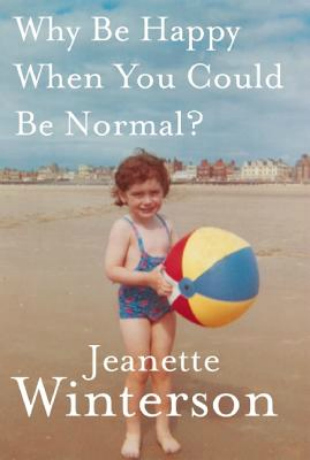
March 2013 - Why Be Happy When You Could Be Normal? By Jeanette Winterson


The account of depression enabled us to understand how Jeanette felt, it sounded profound, e.g. as if she were two people. It encouraged us to be more empathetic to people we knew with depression and why they may come across as cold. Some readers preferred the 2nd half of the book as it felt more of a narrative so it was more interesting. The first few chapters seemed self-involved which made some readers feel impatient but then it is a memoir, but for some readers a few chapters in it clicked and they warmed to the author and found it more enjoyable. Some readers felt the timespan skipped in time so it felt like they were missing something but others felt that it was current as in her feelings at the time and flowed as if the reader was going through experiences and memories with her. We considered that memories are not linear anyway, they occur when they resonate with life and hindsight rather than in the order of growing through childhood. We agreed it is difficult to imagine such a harsh upbringing but those with less empathy for Jeanette said there are so many worse off than her and wanted her to elaborate good aspects such as the church outings! The narrative seemed circular, drifting in and out of time but she explained that as her personality. She seemed very resourceful considering experiences such as sitting out on the doorstep all night but never seemed to have hatred or anger rather appreciation of the kindness of people around her helping her to cope. We considered that a child wouldn't necessarily recognise anger anyway or why it happens as they are often not insightful enough. We found recounts of her childhood more interesting than adulthood. Ironically some felt she seemed more grown up as child, she 'stamped her feet more as adult' but then she was living in fear as child so she wouldn't have been allowed to show her individuality or get her needs met. Jeanette would describe a memory but not why it occurred as she moved on quickly in the telling of events so there was not as much depth. Some Book Club members with personal knowledge on adoption felt the explanations on adoption showed the loyalty felt to your adoptive parents but that you can't fit in, then connecting with birth parents doesn't necessarily live up to what is expected. It is rare for a memoir to be written by the person themselves which was beneficial for expressing depth of feelings - Jeanette didn't hold back on the ugliness of her feelings which was brave. The leap between childhood and adulthood seemed rushed. However Jeanette has a no-nonsense attitude when she speaks so the book is written in a style which reflects her personality.

The part where Jeanette left for Oxford after sleeping in her car highlighted the strength of character and determination that Jeanette possessed and the unconditional support of two significant women giving her the belief and tenacity to get to Oxford at a time when she was the minority. These acts of kindness from relative strangers were significant such as the trampolining teacher letting Jeanette move in and the old lady from church who always wore her coat as he had no clothes but fed the children every week. Many readers were inspired by Jeanette's references to the books she read as she moved through the alphabet and how her relationship between books and depression had been so special. It gave a linear structure to her life and gave her meaning when she had nothing else. This made us want to fall in love with reading again. It was fascinating when she simply decided to write her own book as her mum burned all of hers! Some readers were affected by the scene when Jeanette's uncle turned up and was so reactive. However, it seemed the attempted suicide was glossed over considering how significant it must have been.

Some readers felt sorry for Mrs Winterson, they felt that details of her childhood would have been interesting especially around religion and the mix up of babies and why did she want to adopt? She appeared very complex, especially her many quirks, and readers felt bad for her as she can't tell her side of the story. However, there was a sense of loss and richness not seeing her side. Discovering Jeanette's sexuality provoked a harsh reaction in her mother but at that time we agreed this would have seemed normal as people then didn't talk about problems as everything was behind closed doors. We were expecting a more explosive reaction when Jeanette came out as gay, there seemed an emotional detachment, e.g. we can cure you in church. It came across that this attitude of coping through detachment was passed on to Jeanette. Some readers felt the father was unable to have a positive relationship of love with Jeanette because the mother came between them, he was weak as he was forced to do what his wife wanted. It was positive that he met his new wife who was so different to Mrs Winterston. It was lovely that the book showed the two very different women.

To some readers Jeanette appeared to regress, jumping between childhood memories which they could understand but not empathise with. Obviously a reader never knows the full story and it is unfair to judge anyone in a memoir as they are real which is why we wanted to know more about reasons for behaviour and feelings.  Although this lack of detail reflects Jeanette as a person, as she does not waste time in unnecessary words. Our opinions of Mrs Winterston changed when she was trying to be normal as she seemed more ridiculous, e.g. providing pineapple for Jeanette's friend but it did make her a more interesting person! We discussed that you don't have to feel for the person in a memoir but the genre can make you resonate with your own life or other peoples. For example we discussed how we would have related to Jeanette if we had been at school with her, she was very prickly, not friendly and pushed people away! Some of us did grow to admire her resilience and how her ability to be different has brought her such success.

We appreciated how Jeanette bravely shows that families are not as chocolate box as society likes us to believe and can have a profound effect on our personality. We liked how it reflected the importance of connecting with people who accept you as you are, we might not start out with them but find them through life. Also how sometimes we need to leave our environment to be accepted, as we become older we realise we have to decide who or what is good for us and make informed choices. We agreed it is important to have books as an escape, Jeanette inspired us to want to read more books, to find the passion to interact with books although she did this more than with people! We were aware of her being in an environment that didn't nurture her but sheer drive for something better made her explore other places and people. It was empowering to read through a no-nonsense style, rather than fuzzy feelings which was achieved with humour and non-criticism. The explanations of poetry made us want to read more and reflect on the meaning, to dig deeper. We learnt how it is possible to read books for survival, to have contact with a world outside, such as Accrington, and have hope!

We enjoyed Jeanette's writing style and her references so we would read other books by her. Her other books are based on very different ideas, and almost unexpected by her which is an attraction. We enjoyed the conversational style which led some readers want to read something fictional by Jeanette as it would be interesting. Overall readers enjoyed her dark sense of humour, friendly style and matter of fact eloquence.

We had nine people turn up to the meet, as many others were poorly this month or just didn’t fancy this book. We did notice that most of the people at the meeting who contributed to the above enjoyed the book whereas those who didn’t attend didn’t enjoy it so much, finding it a bit depressing or disjointed. We did however have 14 votes come in, with an average of 6.3 out of ten, lowest 3 highest 9. 

Write up by Teresa

Friday, 15 February 2013

February 2013 - Aquariums of Pyongyang by Kang Chol-Hwan and Pierre Rigoulot


Overall the group had high expectations of this book and were left disappointed. Most had very little knowledge of North Korea and it served as a good introduction to the country but lacked any emotional connection. The text was accessible and easy to read but felt a bit like a school history book. Several of us felt a bit guilty for being bored by Kang’s story. At times, it even seemed he wasn’t that bothered by many of the things that were happening. We wondered if his detachment was due to his culture, being guarded with emotions and opinions all his life or if something was lost in translation. Or a little bit of both. Other books about gulags have been much more emotional.
The story was originally told orally by Kang in Korean to a translator who then translated it into French for Pierre Rigoulot who wrote the memoir. Then it’s been translated again into English. Some of the word choices seemed incorrect to the group and poor use of grammar in places. The use of human instead of humane for instance. The story has not been turned into a novel and therefore lacks a bit of dramatic tension. It stays honest, perhaps because it was so important to Kang to get the truth out of North Korea, but this meant it didn’t grab anyone. The sense of time was also off; it didn’t feel like 10 years had passed and it often jumped around illogically. Where he would go off on a tangent to things that happened later on, he would suddenly be back on day one.
The matter of fact style meant we found the story believable, relentlessly so, and didn’t really doubt his account. Some of the group were expecting to be more shocked and felt he had it easy compared to what others went through.
None of the people described in the book were very well developed and most of them were just names to us, not fully fleshed out individuals. Kang was vague on details which left people like the guards and teachers, who should have been real villains, a bit flat and he even admitted to not knowing his sister very well. The nature of the culture and his circumstances may have contributed to the lack of information on other people and neither he nor Pierre wanted to elaborate. We wanted to know more about his mother and how she was forced to divorce his father, but again, it was rushed through. Someone thought the grandmother should have been a central character, as it felt she was at the heart of the family and kept them all going, but again, she wasn’t developed. There just wasn’t any insight given into them as people.
At first, no one really thought there were any passages that stood out to them but after thinking, quite a few were picked out, although mostly we wanted them to have been more in-depth. It seemed at its cruellest when the agents came to break the news of his mother’s forced divorce. It was severe, taking away all hope and highlighted how horribly they treated people. When women got pregnant, the descriptions of what happened to them seemed like real torture; was a bit more gruesome and had more impact than other descriptions. Some wanted to learn more about the gang culture; that prisons were worse than the gulags but it only touched briefly on the subject. The family’s initial decision to leave Japan and return to North Korea involved the reader the most out of everything that was described.
Interestingly, some found humour amongst the pages. The chapter of self-criticism described practices that were almost absurd. Having to learn passages about the great leader, reciting them as if he were a god. There was also the ignorance of the guards and teachers to the regime. Would they have even noticed if they said the wrong words? Yet the students were punished for correcting. The reactions to the world outside North Korea were also interesting. China is hardly the most liberated country yet when they went to bars they were so shocked at the behaviour of people. Behaviour that seems perfectly normal to us. This highlighted that we take our freedoms for granted. Think of how many times a day you complain about the government?
A few of us felt that the final third was more of an adventure and the book picked up after a boring middle section. The ending was a bit anti-climactic. It was so easy for them to get out of North Korea too; they just walked across the river and that was it. It was commendable that Kang chose to spend his time helping other renegades and the book was obviously his sounding board. It did briefly show how hard it was for North Koreans to acclimatise but it was overall a bit uninspiring. We felt that the current edition could have done with an update in the form of an epilogue as the original translation is from 2001. It would be interesting to know what has happened in the meantime.
Everyone agreed the writing style was awkward, bland even, and lacked anything that would make us want to read more by the authors. It was a shame that such an important and tragic tale was so badly told. It highlighted our ignorance of things that are happening in the world and left us wanting to read more about North Korea.
15 ratings
5.3 average (highest 7, lowest 3). Some people gave it higher marks for the interesting subject matter over the quality of writing

Buy on Amazon

Wednesday, 13 February 2013

January 2013 - The Waterproof Bible by Andrew Kaufman


This book was weird; not necessarily a bad thing as about two thirds of our group loved its quirkiness.
A few of us felt we were missing a point, others found the religious metaphors completely relevant. One of the members completely hated the book, not being able to get their head around a giant green frog driving around in a stolen, white Honda Civic... As a group, we discussed the several stories that ran throughout the book, some of which had great potential and we would have preferred for these stories to be developed more over the linking in of them all to each other. The characters were all grieving in one way or another, and this continued to be a theme throughout all of their individual stories.
Even though the main character Aby, was an aquatic being with gills, walking on land searching for her lost mother, the books spiritual elements were very believable such as grief and the following of religion. One member suggested that as religion is a risky subject to approach, it was a really clever idea to use a made up religion practiced by a fictional race, it made it new to all of us too. Aby’s story wasn't really meant to be believable, but most of us could see how her life resembled our own in certain ways. No one really mentioned Rebecca’s ability to have her feelings felt by those around her, although it was mostly thought to be a nice idea, showing her weaknesses. The way all of the characters dealt with their grief was entirely believable; although not always very emotional (they were quite cold).
Margaret was a strong character, and we liked her for balancing out the weaknesses from the other characters, although she ran away too, as it seemed everyone kept doing throughout the book! We found her quite funny at times, squatting in a hotel and passing it off as her own and her throwing an apple at Aby. As a group, we tended to like the real characters more, as some of us struggled to grasp the Aquatic race. Lewis was grieving for his wife, although we struggled to feel sorry for him, his encounters with “God” were weird, some people loved this character but don’t feel that she was developed well enough, or we didn't see enough of her. Rebecca wasn't really liked too much, she lacked some emotion, and although that was the point once she started throwing away her “feelings” we found that we ended up resenting her after she had cleared out her boxes at EZ Storage. Most of the characters do come full circle in their stories and the ultimate biblical reference was Stuart and his boat; when the floods came it was like Noah and his Ark. The rainmakers were thought to be a nice addition, their trade perhaps being more interesting than their abandoned Father/Son relationship. Overall though, there were too Many characters and we felt that the book would have been better if Andrew Kaufman created less, and developed the main stories more.
The book made us realise how well the Aquatic religion runs parallel with land religions, and how it’s usually extreme in needing to make choices: Choose one thing or the other. Many of us have suffered grief, and as a main theme throughout the book, felt that this was portrayed accurately, with most of the characters being in denial. It also proved how hard relationships are and although most of the characters had messed up at some point, they managed to get through their mistakes. As an addition, we liked the quotes that “God” came up with, for example “Why do bad things happen to good people? It makes a good story”.
We had trouble remembering how this book ended, even the members who had only just finished the day of the meet, it just wasn't memorable. Although it didn't have any loose ends, it was too sudden and still left us asking questions. We did discuss that the ending seemed rushed, but was that reflecting the fact that there was a genuine urgency in each of the characters stories? It was nice that Aby and Margaret were reunited and that the flood, helped to unite both the Aquatic home Aby loved and the land home that Margaret had grown to call her own.The writing style was very easy to read and kept flowing. Even the members who didn't like the book found themselves reading the next chapter because it wasn't a chore. We have a few Kaufman fans and they agree that this isn't his best work, but only three people said they wouldn't bother reading another book of his in the future.
Nineteen people came to this meeting and gave the book an average score of 6.3 out of 10, our lowest being 1, and our highest score was 8.

Buy on Amazon